
Breadcrumb
Netglare-Beyond The Alert: When Your Monitoring Starts Thinking
Something shifted with Netglare in Sprint 8 and it felt significant enough to start a whole new content series about it. For the past several sprints, we've been building what we'd describe as a very competent monitoring tool. Useful, reliable, exactly what it promises to be. Then Sprint 8 happened, and somewhere in the process of building alert grouping and threshold calibration, our monitoring tool started doing something closer to thinking.
Welcome to "Beyond The Alert." This is where we talk about what Netglare is becoming, not just what it already does.
The Alert Problem Nobody Actually Solves
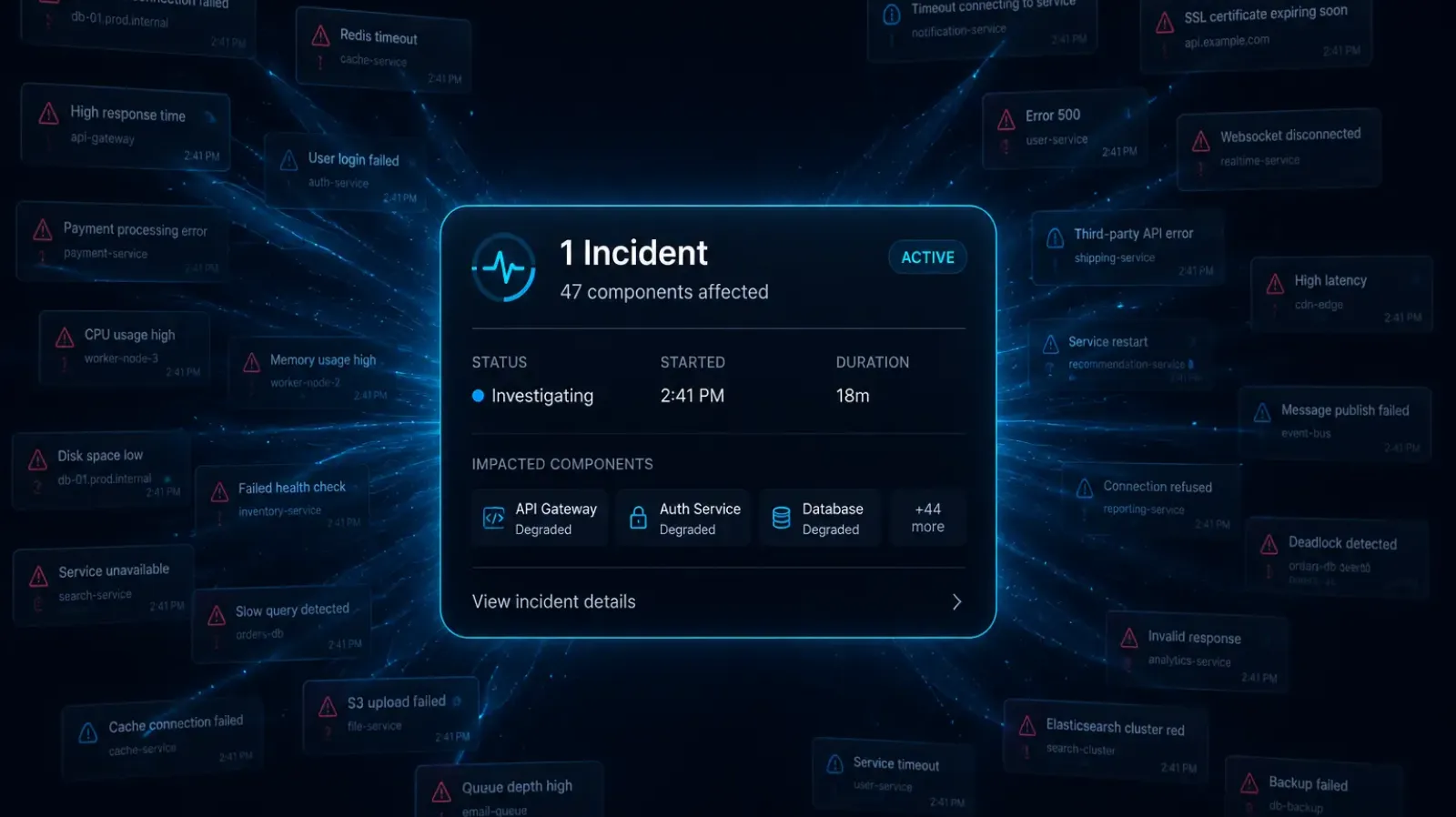
When something breaks in your infrastructure, everything downstream breaks with it. Your server goes down. Your database loses its connection. Your API starts failing. Your endpoints time out. Your users can't log in. Your monitoring tool, faithfully doing its job, sends you an alert for every single one of those things.
47 alerts. One incident. Zero clarity on where to actually start investigating.
This is alert fatigue in its most concentrated form. Not too many alerts in general—too many alerts for one thing, all at once, with no indication of which one is the root cause and which ones are just consequences. You're standing in a flood of notifications trying to figure out which one actually matters while the clock ticks and users experience whatever you haven't fixed yet.
Most monitoring tools treat this as acceptable. We don't.
What Alert Grouping Actually Does
Sprint 8 introduced alert grouping to Netglare. When an incident happens, related alerts get grouped into a single notification. One incident. One alert. Everything affected listed clearly inside it so you understand the scope immediately and know exactly where to start.
You stop seeing 47 alerts for one broken server. You see one incident with 47 affected components, a timestamp showing when it started, and a clear starting point for investigation. The noise disappears. The signal gets loud and clear. Resolution time drops because you're spending your time fixing the actual problem instead of reading about everything that broke because of it.
That's the obvious value. But Sprint 8 had something more interesting underneath it.
The Threshold Calibration Surprise
Alongside alert grouping, we built threshold calibration with a feature that crosses a line most monitoring tools never approach. After seven days of alert frequency data, Netglare starts recommending threshold adjustments based on your specific infrastructure's normal behavior.
Not automatically changing anything. Not demanding action. Just quietly observing that this endpoint has been triggering alerts at this threshold 23 times in the past week, that based on its normal behavior pattern this threshold appears too sensitive, and that here's what it would suggest instead.
That's not passive monitoring behavior. That's active intelligence. The system learning what normal looks like for your specific infrastructure and using that accumulated knowledge to make your monitoring smarter over time. From "here's what happened" to "here's what we think you should change and why."
The first time we saw this recommendation surface during testing, we stopped and looked at it for a moment. Because that's the line. From tool to intelligence. From reporting what happened to understanding it well enough to advise on what should change.
What This Means For The Road Ahead
Alert grouping and threshold calibration aren't just Sprint 8 features. They're the foundation of where Netglare is going. An infrastructure monitoring layer that doesn't just watch your systems but learns them. That doesn't just report problems but helps you understand and prevent them. That gets smarter the longer you use it because it's accumulating the kind of institutional knowledge about your infrastructure that most teams carry around in their heads and lose every time someone leaves.
Sprint 9 brings the weekly digest. Sprint 10 and beyond bring things we're genuinely excited to talk about when they're ready.
But for now: Sprint 8. Alert grouping. Threshold calibration. The first real evidence that Netglare is becoming something more than a monitoring tool.
Head to netglare.com to sign up for early access. Or reach out directly at getstarted@gatoblan.co if you want to talk through your monitoring setup and whether Netglare is the right fit.
The intelligent layer is just getting started.